
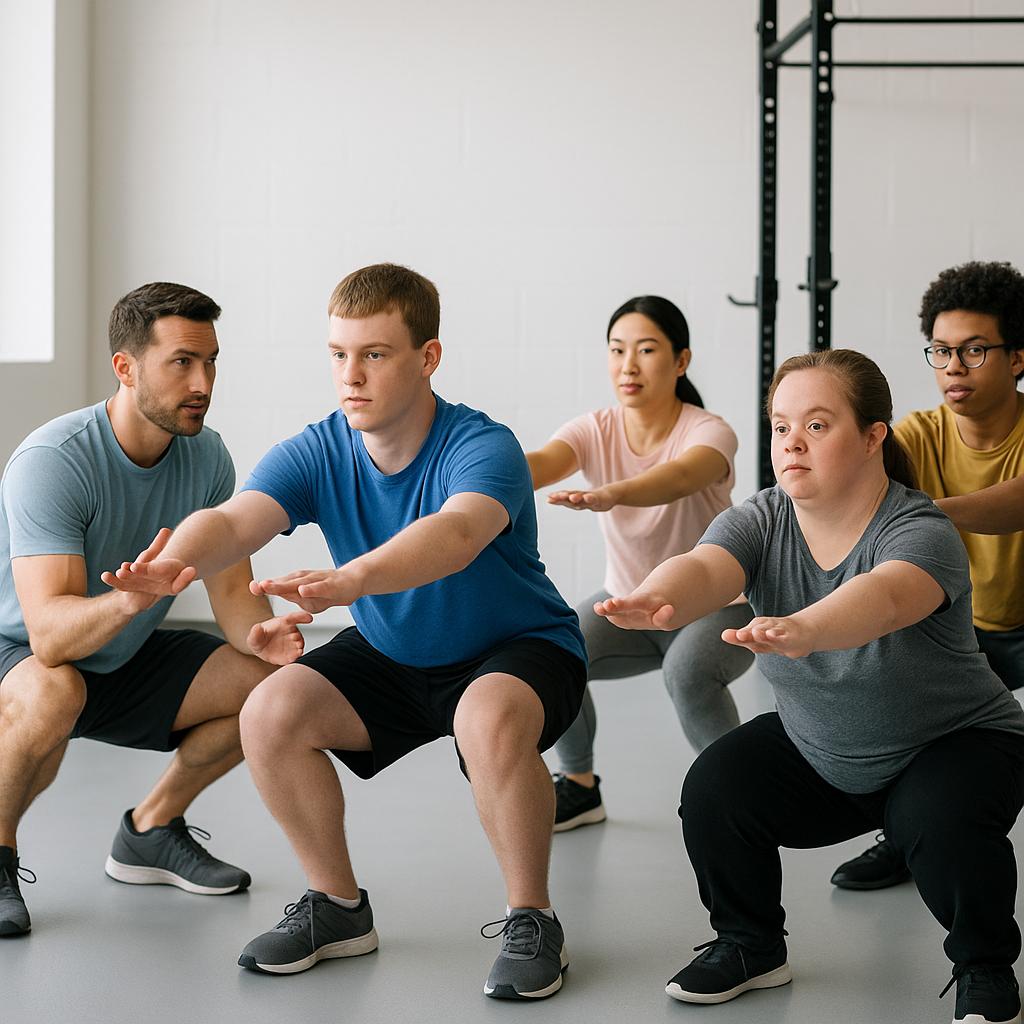
Understanding Injury Risk in Neurodiverse Athletes
The path to bodyweight mastery requires special consideration for neurodiverse athletes. Recent research reveals critical insights that shape how we approach training safely and effectively.
Children with autism face a 12% higher risk of general injuries compared to neurotypical peers, while younger children (ages 3-5) show an even higher risk factor of 28.2%.
Ninja Tip: Begin each session with a structured warm-up routine that emphasizes body awareness and proprioception.
Targeting High-Risk Areas
Head, face, and neck injuries occur 40% more frequently in autistic individuals, highlighting the need for specialized protection and preparation.
Protective Training Strategies
- Progressive Neck Strengthening
- Start with isometric holds
- Advance to controlled range-of-motion exercises
- Master basic positions before attempting dynamic movements
- Proprioception Development
- Balance board training
- Mirror work for movement pattern recognition
- Partner-assisted body awareness drills
Ninja Tip: Use video recording to help athletes visualize and understand movement patterns.
ADHD-Specific Programming
Research indicates elevated injury rates in individuals with ADHD, necessitating a structured approach to training:
Focus-Enhanced Training Blocks
- Short, Intense Intervals (15-20 minutes)
- Clear start and finish markers
- Visual countdown timers
- Immediate feedback systems
- Skill-Based Progression
- Master one element before advancing
- Use achievement checklists
- Implement reward-based milestone systems
Ninja Tip: Break complex movements into smaller, manageable chunks with clear transition points.
Safety Protocol Implementation
Given that 32.3% of autistic individuals experience training-related injuries, we’ve developed specific safety protocols:
- Environmental Controls
- Minimal sensory distractions
- Clear workspace boundaries
- Consistent equipment placement
- Communication Framework
- Visual exercise cards
- Hand signals for common commands
- Regular check-in points
Ninja Tip: Create a personalized cool-down routine that signals session completion and aids in transition.
Understanding Neurodiverse Needs in Fitness
Customization is key for effective training. By tailoring workouts to individual cognitive, sensory, and motor preferences, fitness becomes more inclusive and empowering. For example, adaptive fitness helps improve coordination and focus by addressing sensory overload. This personalized approach not only enhances physical health but boosts mental well-being too.
Ninja Tip: Incorporate quiet, calming spaces into your workout environment to help manage sensory sensitivities. [Source]
Tailored Workouts for Neurodiverse Individuals
Adaptive fitness routines can include low-intensity exercises like yoga or swimming, which are less likely to overstimulate. Visual aids and clear instructions enhance comprehension and execution. Programs should prioritize enjoyment and achievement, promoting consistency and progress. This approach reduces anxiety and boosts self-esteem.
Ninja Tip: Use visual schedules for workout routines to provide structure and support. [Source]
Next Steps in Your Training Journey
- Assess your current movement patterns
- Implement our progressive warm-up protocol
- Start with foundational skills before advancing
- Track progress using our specialized logs
Join the NinjaFitness community for personalized programming and expert guidance in neurodiverse-friendly calisthenics training.
Leave a Reply