
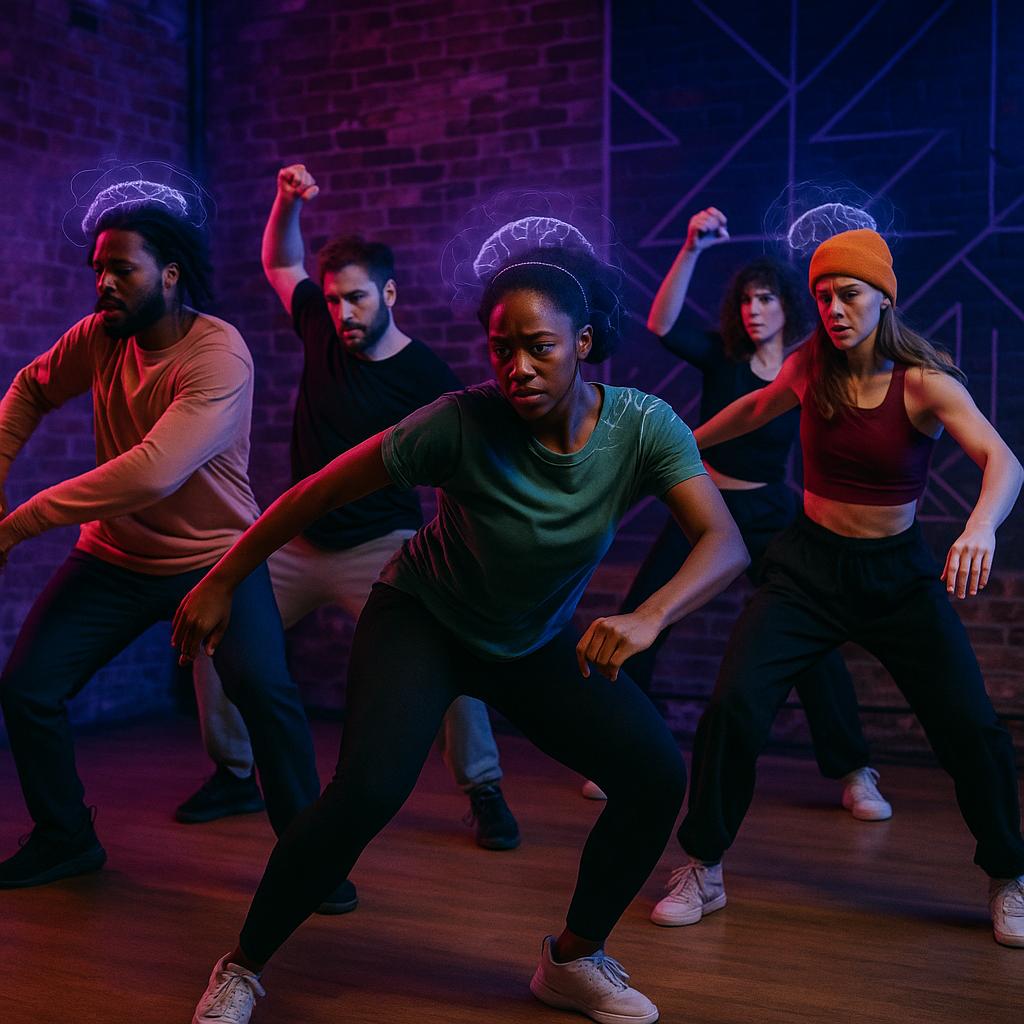
The Neurological Power of Dance
Recent research reveals that dance workouts deliver unique mental health benefits that surpass traditional exercise. Dancing triggers more extensive brain activation than standard workouts, engaging both cognitive and emotional centers.
The Mental Health Advantage
Dance participants show a 76% reduction in anxiety symptoms and an 83% improvement in mood regulation, surpassing results from conventional exercise routines.
Ninja Tip: Incorporate 5-minute dance breaks between intense training sessions to reset your mental state and optimize performance.
Scientific Mechanisms Behind Dance Benefits
Neuroplasticity Enhancement
Dance movement therapy increases neuroplasticity and strengthens neural connections, particularly in regions responsible for:
- Emotional regulation
- Spatial awareness
- Memory formation
Ninja Tip: Practice complex dance sequences to challenge both your body and mind simultaneously.
Stress Response Optimization
Regular dance practice reduces cortisol levels by up to 40% while increasing serotonin production.
Ninja Tip: Start each workout with a 3-minute freestyle dance warm-up to prime your nervous system.
Implementation Strategy
Integration into Training
Combining rhythmic movement with traditional exercise enhances overall athletic performance:
- Improved coordination
- Better balance control
- Enhanced proprioception
Ninja Tip: Add dance-inspired mobility flows between strength sets.
Optimal Duration
20-minute dance sessions provide peak mental health benefits, making them perfect for busy schedules.
Dance and Cognitive Enhancement
Research shows dance improves cognitive functions such as memory and spatial recognition, enhancing overall mental agility. Studies suggest a structured dance regimen can boost both psychological and cognitive health more effectively than other exercises [source].
Ninja Tip: Incorporate coordinated dance movements into your routine to not only sharpen your mind but also heighten focus and problem-solving skills.
Navigating Mental Health Through Dance Therapy
Dance therapy fosters emotional, social, and physical well-being by integrating psychological principles with dance techniques, creating lasting improvements in mood and self-esteem [source]. Regular dance sessions promote mindfulness while offering a supportive social environment for healing.
Ninja Tip: Aim for at least 2.5 hours of rhythmic movement weekly to maximize mental and emotional benefits.
Your Next Steps
- Start with 5-minute dance breaks
- Progress to 20-minute sessions
- Experiment with different styles
- Track your mental state changes
Ready to transform your training journey? Join our NinjaFitness Dance-Enhanced Mobility program and discover how rhythmic movement can elevate your performance.
Leave a Reply